
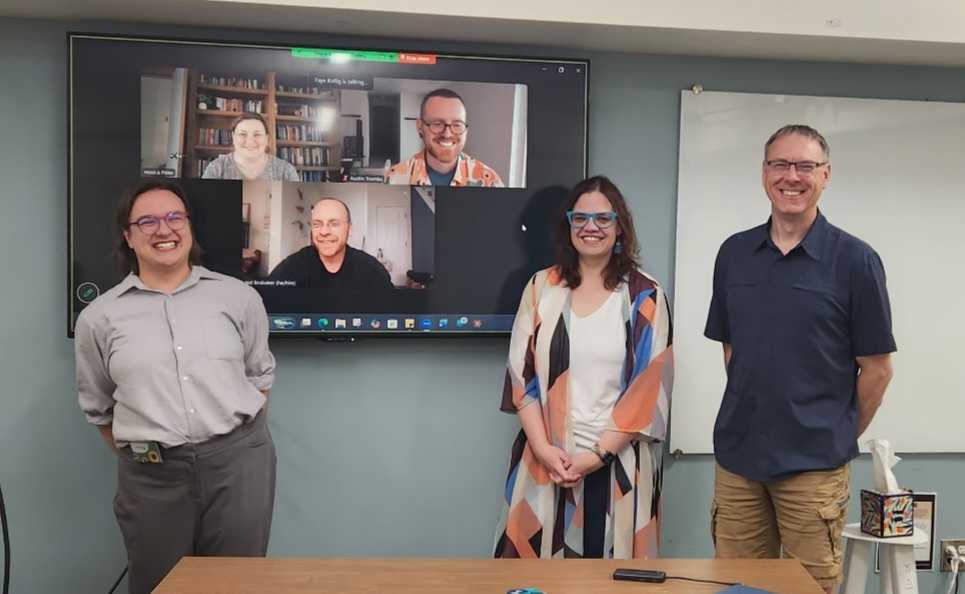
Myself and my dissertation committee (on screen: Drs. Jessica Pater, Austin Toombs, Jed Brubaker; in person: Drs. Casey Fiesler, and Steve Voida) post successful proposal defense!
I mark mid-summer each year with a review of some lessons I’ve learned over the course of the year, especially with regards to how chronic illness and disability manifest for me as a graduate student. This year, I’m marking it with a new job title; as of May 15th, 2026, I am now a PhD candidate!
To all of my fellow PhD travelers who have recently finished or expect to finish their proposals/comprehensive exams, congratulations. To all the academic travelers who serve on committees, thank you for your time and service. For me, proposing was substantially more challenging than preliminary exams, and I am more grateful than ever that it is not a journey I am on alone.
You can’t hang your identity or worth on your work. This is not an easy thing to internalize. In fact, I would be surprised if it was common for people to have created a full separation; frankly, it can feel amazing to hang your value as a person on your work when it is work you’re proud of. It is also a unique privilege to have the professional flexibility and incentive structure for personally meaningful and enriching work. Beyond that, cultivating competence, skills, and expertise are the point of getting a PhD – we are here to learn about things we care about and improve at skills that are critical to move forward in an impactful career in research, teaching, policy, design (or whatever your personal path looks like). As much as I’ve appreciated this part of the work, I also have found that a view of self that does not reserve space for (1) your intrinsic worth as a human being and (2) the value you bring to spheres unrelated to work, is a foundation of wet sand. It may seem stable for a moment, in the right conditions, but it can dry out and shift, especially when your body and mind trend towards instability to begin with. You cannot show up for the work (consistently and resiliently) without first internalizing that you are a human being first, before you are a researcher, teacher, or designer. You are a sibling, child, partner, parent, friend, cousin, mentor, crocheter, gamer, musician, runner, artist, reader, advocate, cook, volunteer, lover of true crime or matcha or dogs or anime. “Diversify your assets” or “find balance” might be some of the most cliché advice that you’ve definitely heard before, but hearing, believing, and implementing are very different things. It’s worth it to try to believe and act as though you are a human being first. It’s worth it to try to believe and act as though your roles and ambitions outside of work are not optional bonuses.
Your best assets are practice, people, and prioritization. I don’t know that this requires much of an explanation, especially since this bit of advice (perhaps not in so many words) is relatively standard for PhD students. Make everything double count, is a prioritization mantra I heard and internalized right from my first semester. But I believe that while these resources are very important for just about anyone, they are the basis of survival for the disabled or chronically ill academic. Practice time management, communication, writing, data analysis – and rest, boundaries, kindness, adaptation, and hope. Find people to network and collaborate with, mentor, be mentored by – and build systems of mutual support that account for the unpredictable symptoms and barriers that can show up to change or devastate hours to years of your life. Prioritize meaningful and goal-oriented work, ethics, high-quality research – and prioritize health and sustainability in a system that is always tipping insidiously towards unsustainability. When practice fails, prioritize; when prioritizing fails, find people.
Accessibility is equity. It is not a privilege, or an unfair advantage, or a crutch. People never start from the same place and never have identical requirements to get where they’re going. I am increasingly realizing that every instinct in me that screams that I “should be able to manage without accommodations” is a byproduct of an ableist culture that does not tolerate digression from the mean. Not everybody has to carefully ration their screen time to avoid migraines. Not everybody has to manage disruptive side effects of life-saving medications. Not everybody has to divert the money that was supposed to strengthen their safety net towards hospital payment plans, even as the same expensive body/mind makes them more likely to need that safety net in the first place. The older I get, the deeper my belief and appreciation for the concept of equity. An ethic that lauds our individual strengths and contributions demands equal acceptance of the unique resources it takes for each of us achieve them. Viewing accessibility measures by default as unreasonable, odd, special or unfair, whether that viewpoint is internalized by a disabled person or imposed on them by an outside source, works from the faulty assumption that we can fully grasp the ways that other people are different from us. We all tend to think people are more like us than they are – it’s a very normal human bias to have. But creating spaces within ourselves and our workplaces that are truly accessible and inclusive has to start from a foundation of challenging that bias. I do not know, fully, what it is like to be you, and vice versa. We have to create norms that allow disabled people to be taken at their word.
Self-advocacy is not easy. It is okay if you cannot, or choose not to, do it sometimes. For the chronically ill or disabled academic reading: I see you, and how hard it is to make the decision. Should I make myself vulnerable that way? Can I white-knuckle through without the accommodation? Is this person safe? Will I now be on the receiving end (directly or indirectly) of all the biases they carry about my health condition? Will this disclosure follow me? Will I be branded as high-maintenance or unreliable? Is this just another instance where a well-meaning person will not be able to help me within an inflexible system? I have been trying lately to give myself permission to view self-advocacy, requesting accommodations, and setting boundaries for what they are: tasks that require logistical and emotional labor, that carry risk, that are simply not always worth it or possible, and are subject to prioritization like anything else on your to-do list. No matter what in your life is making self-advocacy easier or harder, it is okay to strategically opt out as a rational choice under those constraints. Not everybody is safe to tell, not every system can support your needs, not every task is worth doing. And when you do advocate for yourself, with all of the psychological and practical barriers in mind, you can give yourself credit for that. I’m proud of you, even if it didn’t turn out how you hoped.
As usual, to wrap up this reflection, here’s some things that happened during the fourth year of my PhD that I am proud of, in no particular order:
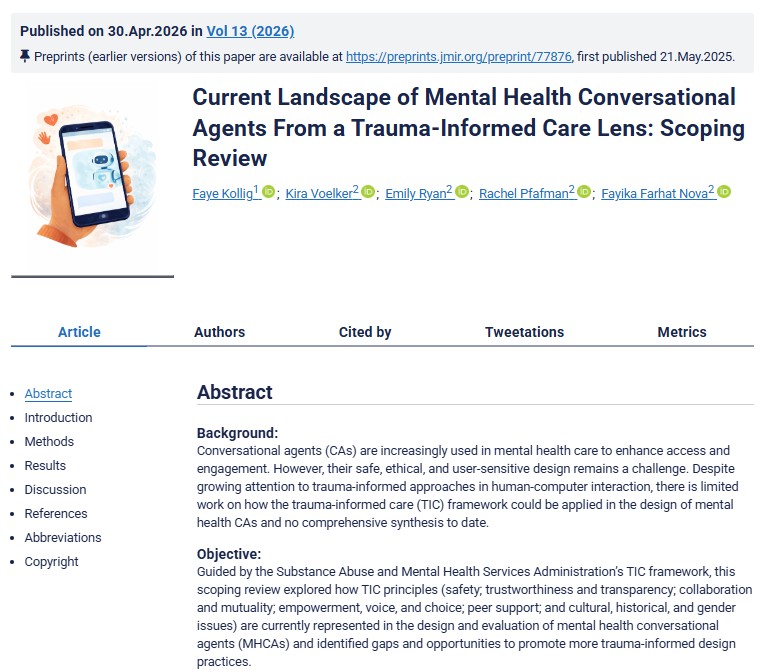
- Completed a research internship at Parkview Health, and got the paper I worked on with that team published in the Journal of Medical Internet Research;
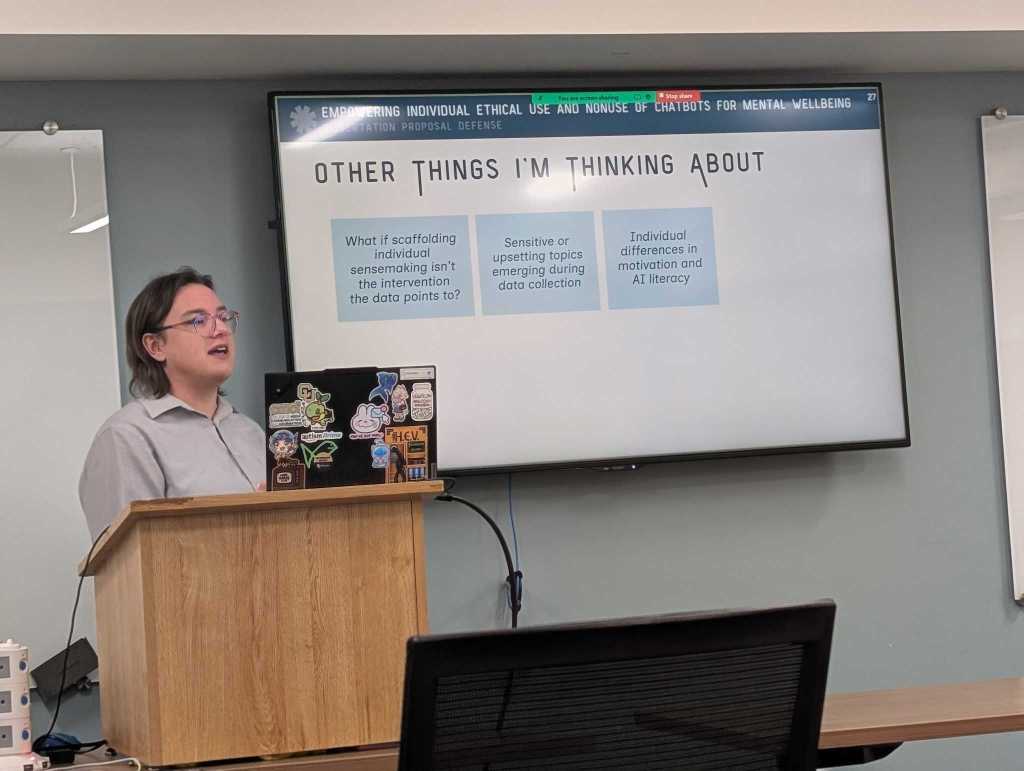
- Prepared for, wrote, presented, and passed my dissertation proposal;
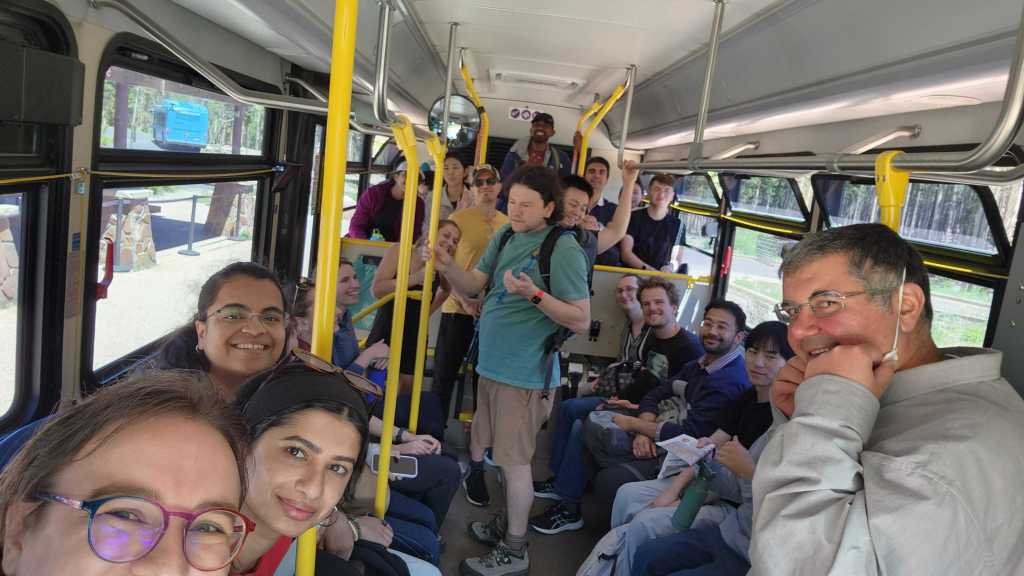
- Attended the Human-Computer Interaction Consortium in Estes Park;
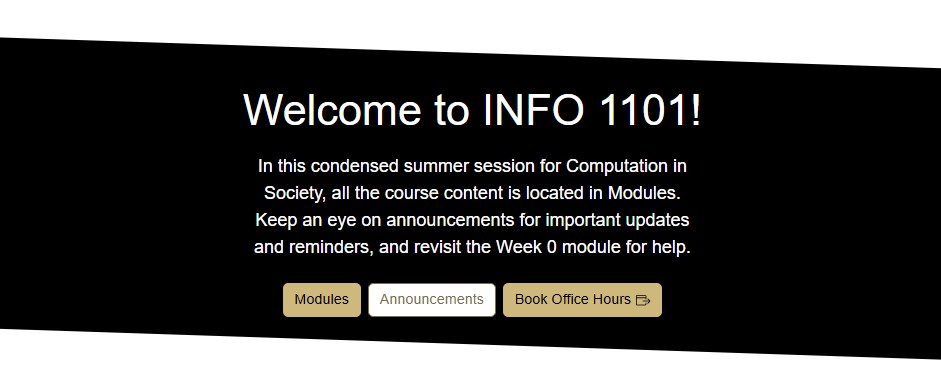
- Solo-instructed a course for the first time (a summer session of an introductory course in our college);
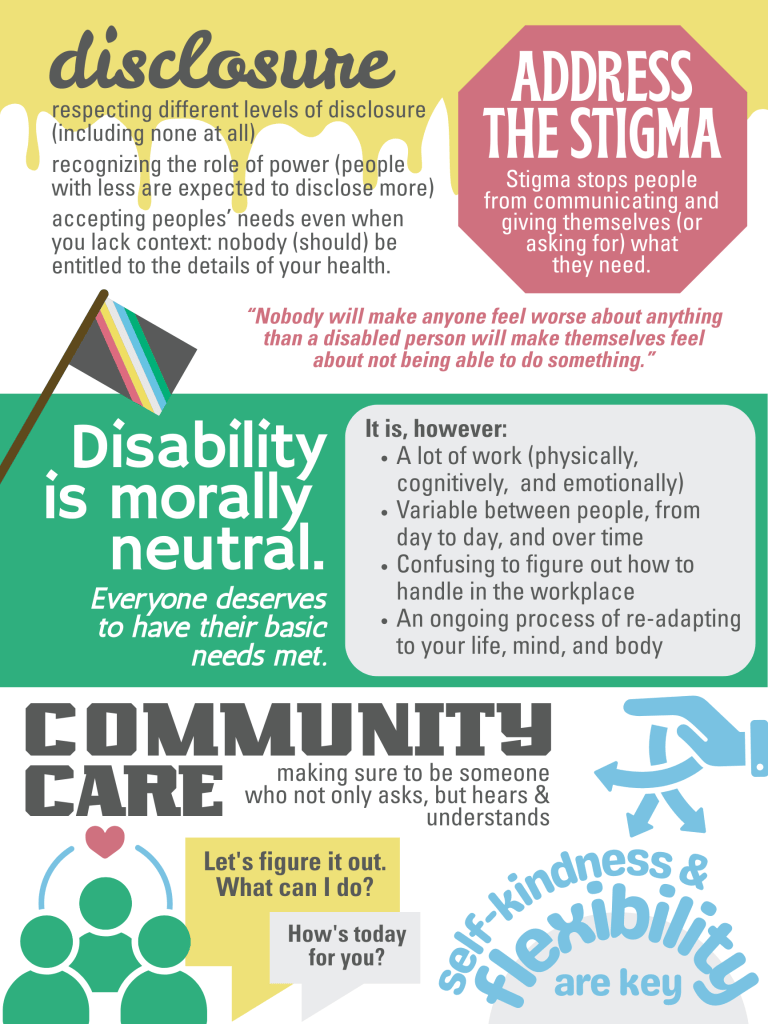
- Co-organized a panel and wrote an informational resource on supporting folks with disabilities in our department;
- Moved to a new condo;
- Built a lot of new friendships and relationships;
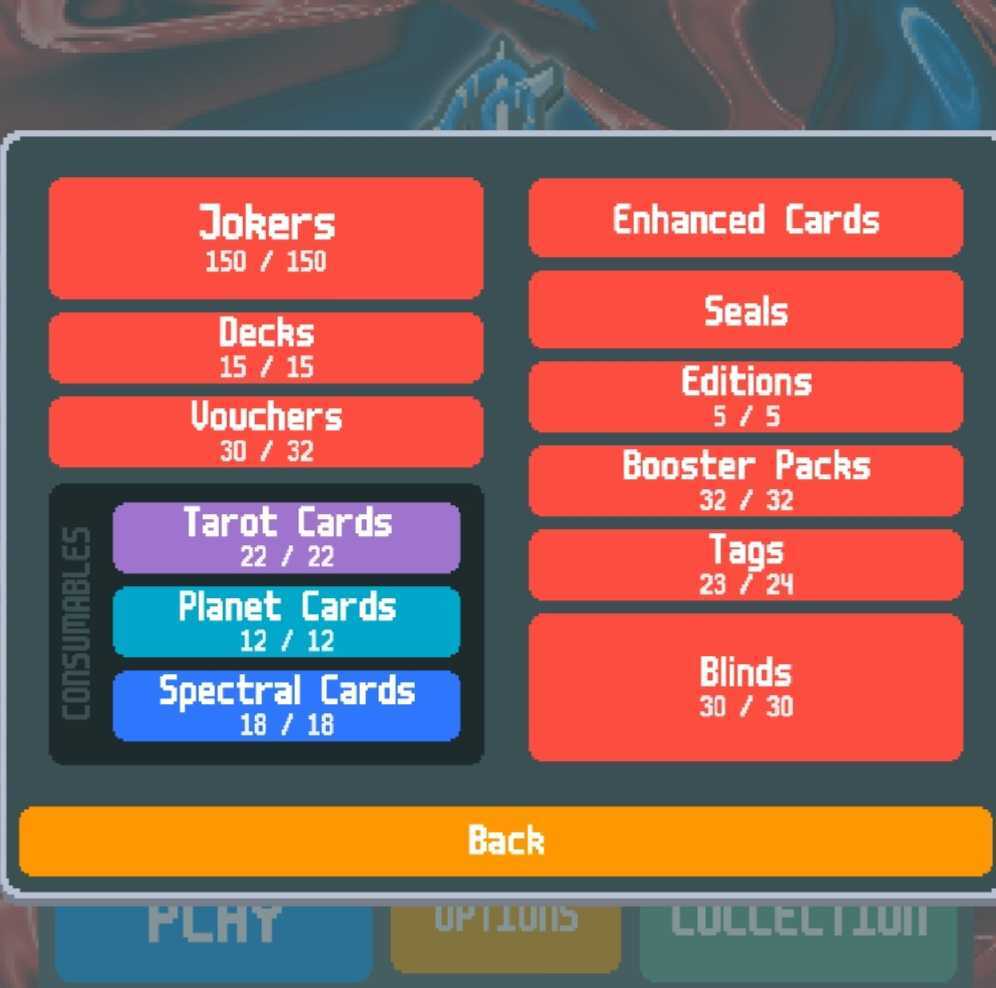
- Unlocked all jokers in Balatro;
- Was able to budget so I could donate to charities I really care about (s/o https://www.thetrevorproject.org/);
- Made great progress managing the impact of some of my health conditions;
- Saw dodie clark in concert (a dream of mine for a decade!);
- Turned 25!





Leave a Reply